


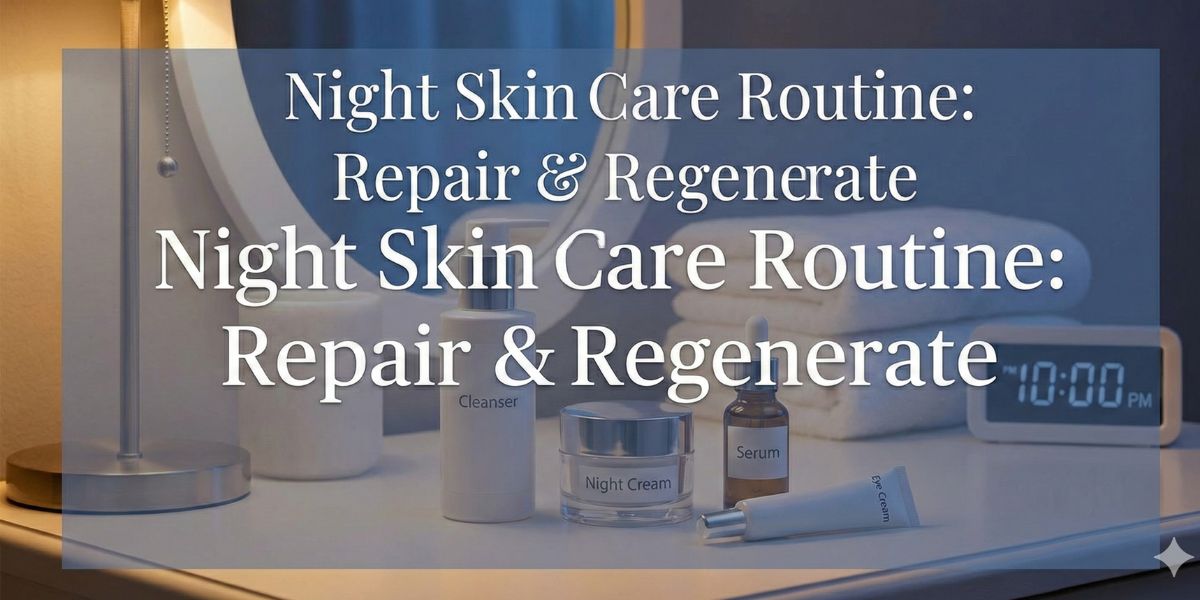
Night Skin Care Routine Steps
Night time is the most important phase for skin repair. According to dermatologists, skin regeneration, cell turnover, and collagen production increase while we sleep. A proper night skincare routine helps the skin heal from daily damage caused by sunlight, pollution, stress, and makeup.
Following the right night skin care routine in the correct order ensures better absorption of products and long-term skin health.

Why Night Skin Care Is Important
From a medical perspective:
- Skin cell renewal peaks at night
- Blood flow to the skin increases during sleep
- Loss of moisture (TEWL – Transepidermal Water Loss) is higher at night
- Active ingredients work better when skin is at rest
That is why dermatologists strongly recommend a structured night routine.
Step-by-Step Night Skin Care Routine
Step 1: Gentle Cleansing
Purpose: Remove dirt, oil, sunscreen, makeup, and pollutants.
Use a mild, soap-free cleanser suited to your skin type. Cleansing prevents clogged pores and bacterial growth, which can lead to acne and inflammation.
✔ Dermatologist tip: Avoid harsh face washes that strip natural oils.
Step 2: Double Cleansing (If You Wear Makeup or Sunscreen)
Purpose: Deep pore cleansing.
- First cleanse: Oil-based cleanser or micellar water
- Second cleanse: Water-based gentle face wash
This step is medically recommended for people exposed to heavy pollution or makeup.
Step 3: Toning (Optional but Helpful)
Purpose: Restore skin pH and prepare skin for treatments.
Alcohol-free toners help soothe the skin and improve absorption of active ingredients.
✔ Medically beneficial for oily, acne-prone, and sensitive skin.
Step 4: Treatment Serum (Active Ingredients)

Purpose: Target specific skin concerns.
Depending on your skin issue:
- Niacinamide: Controls oil and strengthens skin barrier
- Retinol: Improves acne, fine lines, and pigmentation
- Hyaluronic Acid: Deep hydration
- Azelaic Acid: Acne and redness control
Retinol should be used only at night and in limited amounts.
Step 5: Eye Cream
Purpose: Protect delicate under-eye skin.
The eye area is thinner and more prone to wrinkles. Eye creams with peptides or caffeine help reduce puffiness and fine lines.
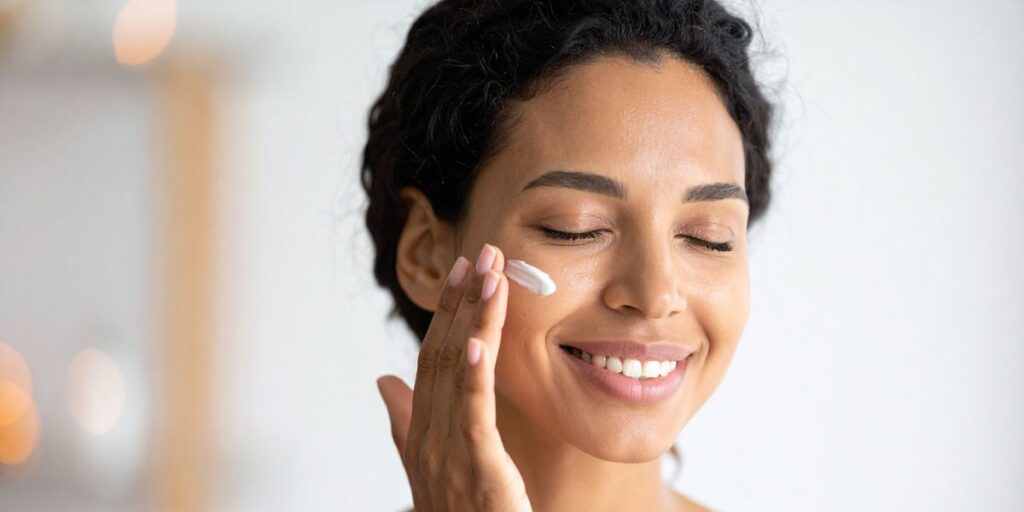
Step 6: Moisturizer / Night Cream
Purpose: Seal moisture and repair skin barrier.
A night cream replenishes lipids, prevents water loss, and supports healing during sleep.
✔ For dry skin: Use ceramide or glycerin-based creams
✔ For oily skin: Use lightweight, non-comedogenic moisturizers
Step 7: Lip Care
Purpose: Prevent dryness and cracks.
Apply a nourishing lip balm or petroleum jelly to repair lips overnight.
Additional Medical Night Skin Care Tips
- Sleep 7–8 hours daily for optimal skin regeneration
- Change pillow covers regularly to avoid bacterial transfer
- Avoid touching your face frequently
- Do not overuse active ingredients
- Always remove sunscreen before sleeping
Common Mistakes to Avoid at Night
- Sleeping with makeup on
- Over-exfoliating
- Mixing too many active ingredients
- Skipping moisturizer due to oily skin
- Using morning products at night

In Beauty Home Salon – Zirakpur
Get clear, glowing skin naturally! 💧
Gentle facials, natural care, and expert tips to keep your skin healthy and radiant. 🌿
📍 Zirakpur | Chandigarh | Panchkula | Mohali
Final Advice
A consistent night skincare routine is more effective than expensive products. Dermatologically approved steps help maintain skin health, prevent premature aging, and support natural glow. Always choose products based on your skin type and concerns, and introduce new treatments gradually.
1. Why is a night skin care routine important?
At night, skin regenerates, repairs damage, and absorbs nutrients better. A proper routine enhances hydration, reduces aging signs, and supports overall skin health.
2. How many steps should a night skin care routine have?
A complete night routine usually has 5–7 steps: cleansing, toning, treatment/serum, eye cream, moisturizer/night cream, and lip care. Optional steps include double cleansing or masks.
3. Can I skip steps like toner or eye cream?
Some steps can be optional depending on skin type. Cleansing and moisturizing are essential; toners, serums, and eye creams enhance results but are not mandatory.