


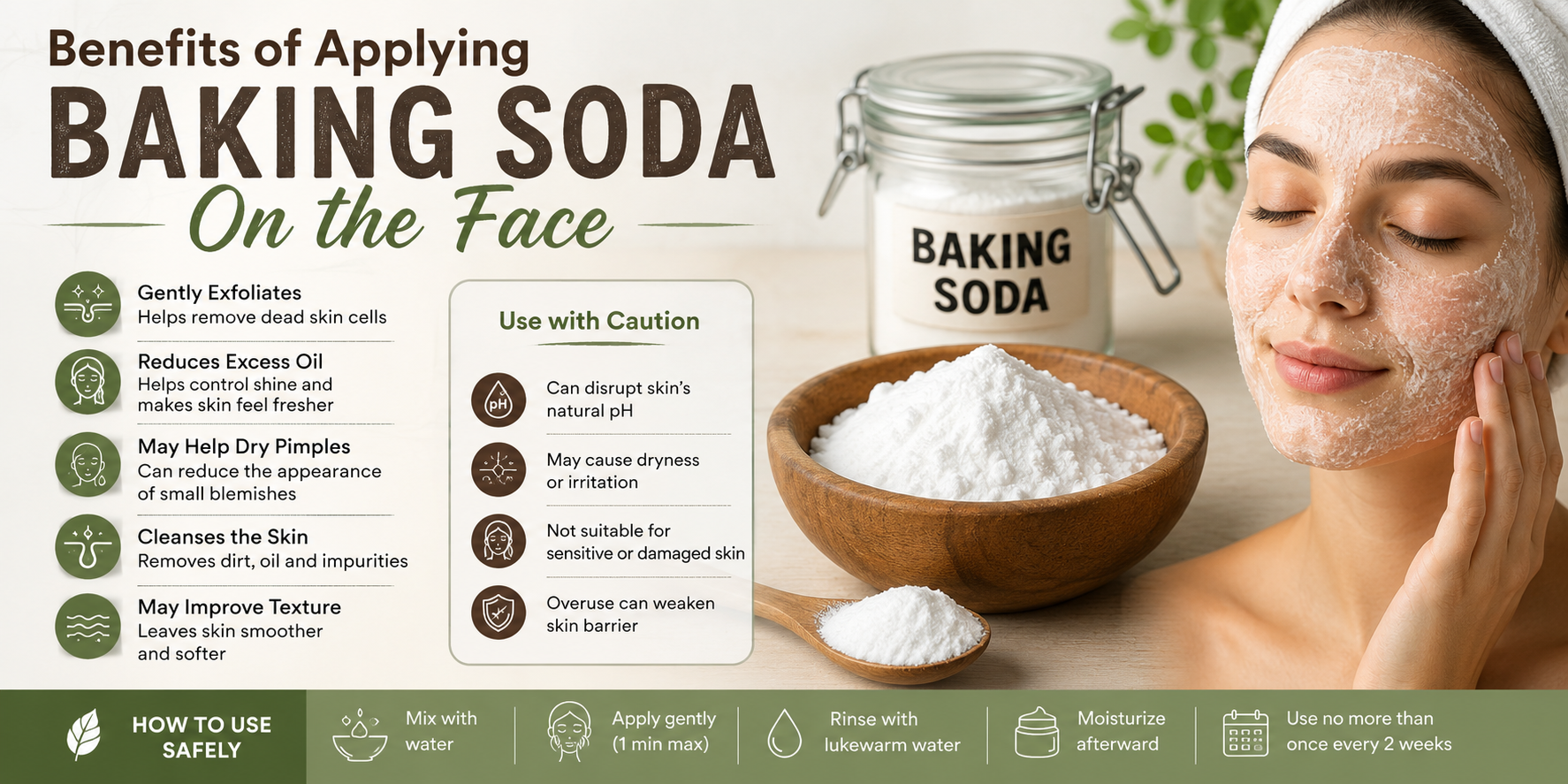
Benefits of Applying Baking Soda on the Face: Is It Safe?
Baking soda is a common household ingredient that many people use in DIY skincare. It is often promoted as a natural remedy for acne, dark spots, and oily skin. While baking soda may offer some temporary benefits, dermatologists generally advise using it with caution because it can damage the skin’s natural protective barrier.

In Beauty Home Salon – Zirakpur
Get clear, glowing skin naturally! 💧
Gentle facials, natural care, and expert tips to keep your skin healthy and radiant. 🌿
📍 Zirakpur | Chandigarh | Panchkula | Mohali
Potential Benefits of Baking Soda for the Face
1. Helps Exfoliate Dead Skin Cells
Baking soda has a fine, grainy texture that can act as a physical exfoliant. Gentle exfoliation may remove dead skin cells, leaving the skin looking smoother and brighter.

2. Reduces Excess Oil
People with oily skin may notice that baking soda absorbs excess oil from the skin’s surface. This can temporarily reduce shine and make the face feel fresher.
3. May Help Dry Out Pimples
Because baking soda has drying properties, some people use it as a spot treatment for pimples. It may help reduce the appearance of small blemishes by removing excess oil.
4. Cleanses the Skin
Baking soda can help remove dirt, oil, and impurities from the skin, making it a popular ingredient in homemade face masks and cleansers.
5. May Improve Skin Texture
Occasional exfoliation with baking soda may make rough skin feel softer. However, this effect is temporary and should not replace a proper skincare routine.
Risks of Using Baking Soda on the Face
Despite its potential benefits, baking soda is not ideal for regular facial skincare.
- Disrupts the skin’s pH: Healthy skin has a slightly acidic pH, while baking soda is highly alkaline. Regular use can weaken the skin barrier.
- Causes dryness: Frequent application may strip away natural oils, leaving the skin dry and flaky.
- May cause irritation: People with sensitive skin may experience redness, itching, or burning.
- Can worsen acne: Damaging the skin barrier may lead to inflammation, which can make acne worse over time.
How to Use Baking Soda Safely
If you choose to try baking soda on your face:
- Mix one teaspoon of baking soda with enough water to form a smooth paste.
- Apply only to the desired area or use as a spot treatment.
- Leave it on for no more than one minute.
- Rinse thoroughly with lukewarm water.
- Apply a gentle moisturizer immediately afterward.
- Use it no more than once every two weeks.
Always perform a patch test before applying baking soda to your face.
Who Should Avoid Baking Soda?
Avoid using baking soda if you have:
- Sensitive skin
- Eczema
- Rosacea
- Very dry skin
- Open wounds or broken skin
- Active skin infections
Better Alternatives to Baking Soda
Instead of baking soda, consider skincare ingredients that are proven to be safer and more effective:
- Salicylic acid for acne-prone skin
- Lactic acid or glycolic acid for gentle exfoliation
- Niacinamide for oily skin and enlarged pores
- Vitamin C for brighter skin
- Clay masks to reduce excess oil
These products are formulated to work with the skin’s natural barrier and are less likely to cause irritation.
Final Thoughts
While baking soda may temporarily exfoliate the skin, reduce oil, and dry out small pimples, it is not recommended as a regular facial treatment. Its high alkalinity can disrupt the skin’s natural pH, leading to dryness, irritation, and long-term skin barrier damage. For healthy, glowing skin, use dermatologist-approved skincare products that are specifically designed for facial use.
Disclaimer: This article is for informational purposes only and should not replace professional medical advice. If you have persistent skin concerns or a skin condition, consult a qualified dermatologist before trying DIY skincare remedies.