


Difference between cleansing and face wash
When it comes to skincare, people often use the words cleansing and face wash interchangeably. But here’s the truth — they are not exactly the same thing.
If you’ve ever wondered why some people use cleansing milk before face wash, or why double cleansing has become such a huge skincare trend, this guide will clear everything up.
Whether you have oily skin, dry skin, acne-prone skin, or sensitive skin, understanding the difference between cleansing and face wash can completely change your skincare routine.
What is Cleansing?
Cleansing is the process of removing dirt, oil, makeup, sunscreen, sweat, and impurities from your skin.
It is a broader skincare step that focuses on deeply cleaning the skin surface without damaging the skin barrier.
Cleansing products include:
- Cleansing milk
- Cleansing balm
- Micellar water
- Oil cleansers
- Cleansing lotions
- Cream cleansers
These products are usually gentle and are designed to dissolve impurities rather than aggressively strip the skin.
Main Purpose of Cleansing
The primary goal of cleansing is to:
- Remove makeup and sunscreen
- Eliminate excess oil
- Clean pollution particles
- Prepare skin for skincare products
- Maintain healthy skin balance
What is a Face Wash?
A face wash is a specific type of cleanser that uses foaming or gel-based formulas to wash the skin more thoroughly.
It is mainly used with water and is designed to clean deeper into pores.
Face washes are especially popular among people with:
- Oily skin
- Acne-prone skin
- Combination skin
- Sweat-prone skin
Most face washes create foam or lather that helps remove dirt and oil buildup.
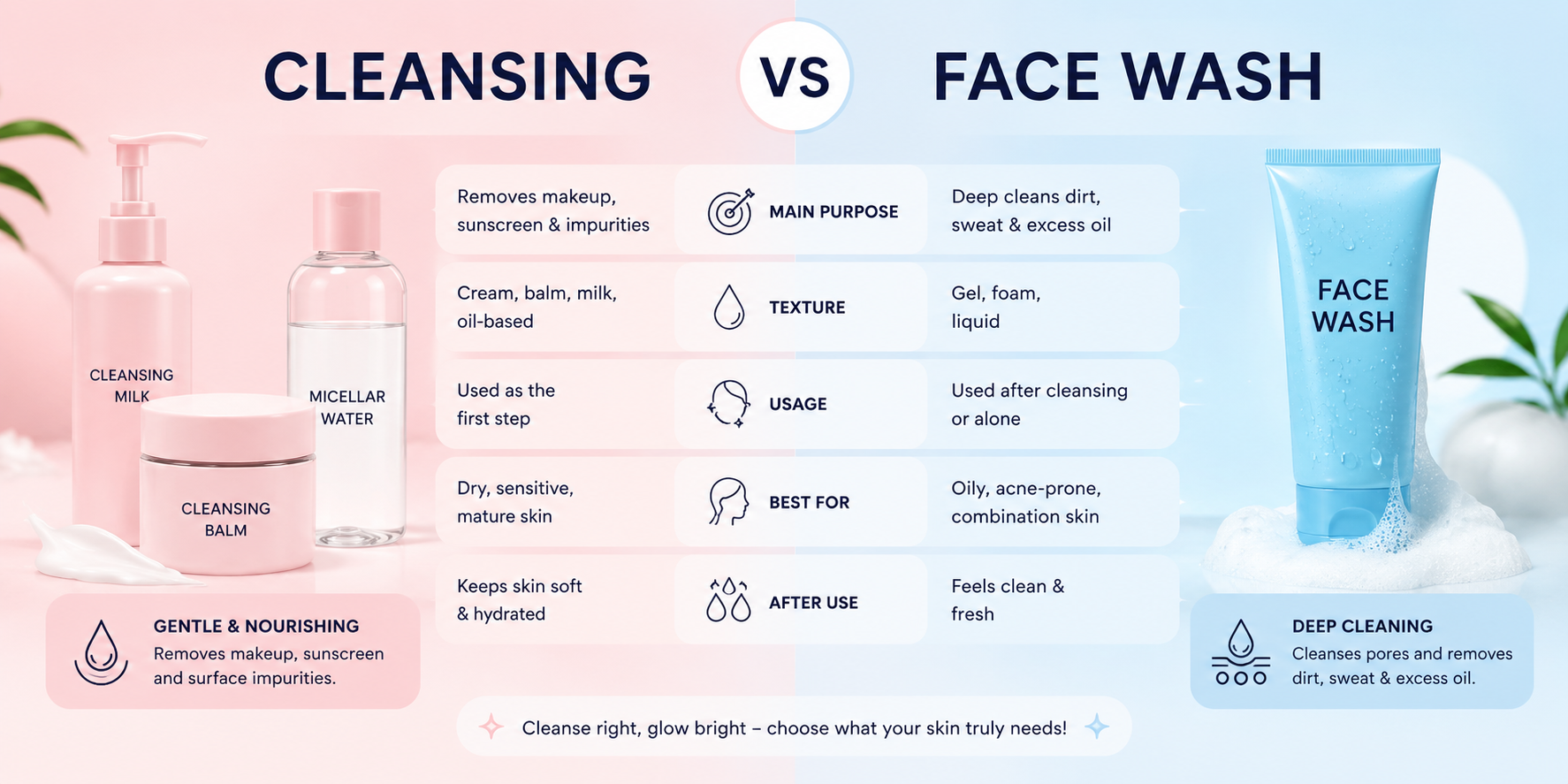
| Feature | Cleansing | Face Wash |
|---|---|---|
| Main Purpose | Removes makeup, sunscreen, and surface impurities | Deep cleans pores, dirt, sweat, and excess oil |
| Texture | Cream, balm, milk, oil-based | Gel, foam, liquid |
| Usage | Usually first step in skincare | Used after cleansing or alone |
| Works Best For | Dry, sensitive, mature skin | Oily, acne-prone, combination skin |
| Removes Makeup? | Yes | Sometimes, but not always effectively |
| Hydration Level | Keeps skin soft and moisturized | Can feel fresh but may dry skin if overused |
| Deep Cleansing | Mild to moderate | Strong deep-cleaning action |
| Daily Use | Gentle enough for regular use | Best used 1–2 times daily |
| Suitable for Double Cleansing | Yes | Yes, as second step |
| Skin Feel After Use | Smooth and nourished | Clean and refreshed |
Cleansing vs Face Wash: The Core Difference
1. Purpose
Cleansing
Cleansing focuses on gently removing surface impurities, makeup, and excess oil.
Face Wash
Face wash focuses on deep cleaning pores and removing sweat, dirt, and bacteria.
2. Texture and Formula
Cleansers
Usually come in:
- Cream form
- Balm texture
- Milk consistency
- Oil-based formulas
Face Washes
Usually come in:
- Gel form
- Foam form
- Liquid formulas
3. Skin Feel After Use

In Beauty Home Salon – Zirakpur
Get clear, glowing skin naturally! 💧
Gentle facials, natural care, and expert tips to keep your skin healthy and radiant. 🌿
📍 Zirakpur | Chandigarh | Panchkula | Mohali
Cleansing Products
Leave the skin soft, hydrated, and balanced.
Face Wash Products
Can leave the skin feeling extra fresh and squeaky clean.
However, some strong face washes may also make skin dry if overused.
4. Best Skin Types
Cleansers are Best For:
- Dry skin
- Sensitive skin
- Mature skin
- Dehydrated skin
Face Washes are Best For:
- Oily skin
- Acne-prone skin
- Combination skin
Do You Need Both Cleansing and Face Wash?
The answer depends on your lifestyle and skin type.
When You Only Need a Face Wash
You may only need a face wash if:
- You don’t wear makeup
- You stay indoors most of the day
- Your skin is oily
- You sweat heavily
When You Need Both
You should use both cleansing and face wash if:
- You wear makeup regularly
- You apply sunscreen daily
- You live in a polluted city
- Your skin feels congested
- You follow a nighttime skincare routine
This method is called double cleansing.
What is Double Cleansing?
Double cleansing means cleaning your face in two steps:
Step 1: Use a Cleanser
An oil-based or cream cleanser removes:
- Makeup
- Sunscreen
- Excess oil
Step 2: Use a Face Wash
A water-based face wash removes:
- Sweat
- Dirt
- Remaining impurities
This technique leaves the skin deeply clean without over-drying it.
Which One is Better for Acne?
Many people think harsh face washes help acne, but over-cleansing can actually irritate the skin.
Best Approach for Acne-Prone Skin
- Use a gentle cleanser first
- Follow with a mild salicylic acid face wash
- Avoid alcohol-heavy formulas
- Never over-wash your face
Dermatologists often recommend balancing cleansing with hydration to avoid damaging the skin barrier.
Common Mistakes People Make
1. Using Face Wash Too Frequently
Washing your face 4–5 times a day can strip natural oils and trigger more oil production.
2. Skipping Cleansing Before Bed
Sleeping with makeup or sunscreen can clog pores and lead to breakouts.
3. Choosing the Wrong Product for Skin Type
Using a strong foaming face wash on dry skin can cause irritation and redness.
In Beauty Home Salon – Zirakpur
Get clear, glowing skin naturally! 💧
Gentle facials, natural care, and expert tips to keep your skin healthy and radiant. 🌿
📍 Zirakpur | Chandigarh | Panchkula | Mohali
Final Thoughts
Cleansing and face wash are closely related, but they serve different purposes in skincare.
A cleanser gently removes makeup, oil, and impurities, while a face wash provides a deeper clean for pores and excess dirt.
Understanding the difference helps you choose the right skincare products and avoid unnecessary skin damage.
If you want healthy, glowing skin, focus less on aggressive washing and more on balanced cleansing.