


What does AHA do for your skin
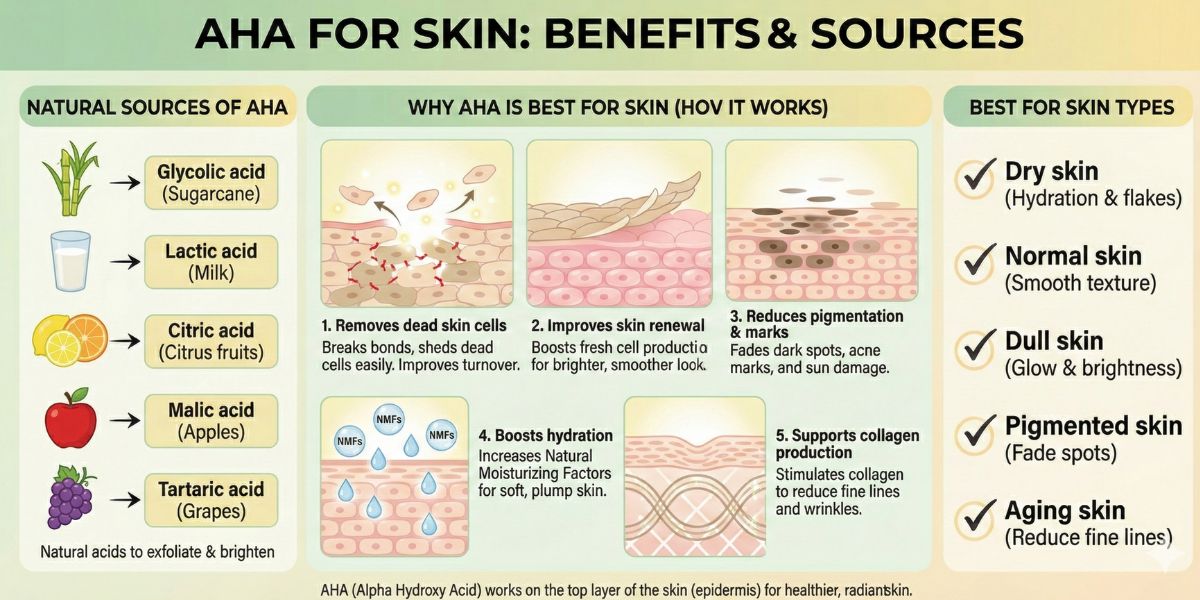
AHA stands for Alpha Hydroxy Acid. It is a common ingredient used in skincare products like face washes, toners, serums, and peels. AHAs come from natural sources such as fruits, milk, and sugar. They are mainly known for making the skin look brighter, smoother, and healthier. Below discuss to AHA for skin
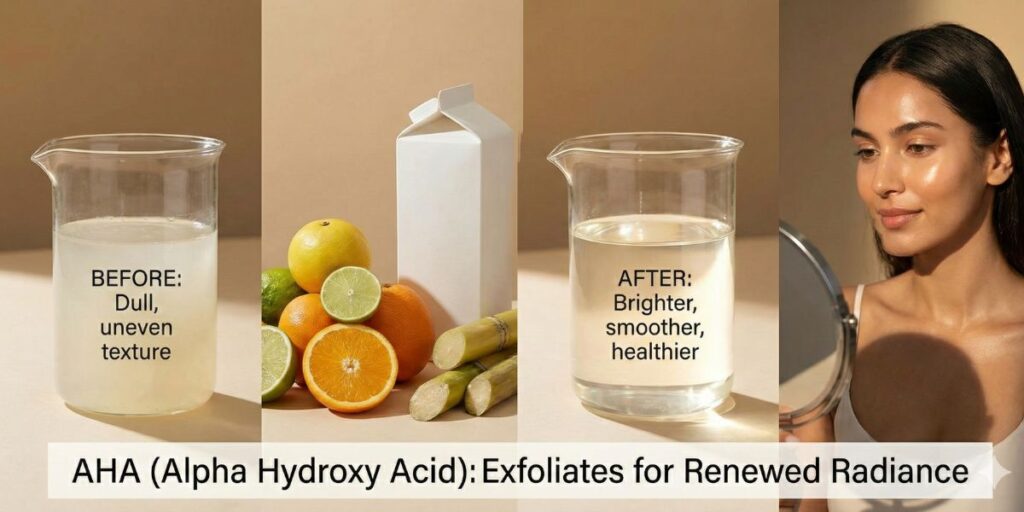
AHA (Alpha Hydroxy Acid) is made from natural sources.
AHA is usually derived from fruits, milk, and sugar.
Some common sources of AHA are:
- Glycolic acid – comes from sugarcane
- Lactic acid – comes from milk
- Citric acid – comes from citrus fruits like lemon and orange
- Malic acid – comes from apples
- Tartaric acid – comes from grapes
These natural acids are used in skincare products to help remove dead skin cells and brighten the skin
Why Is AHA Best for Skin
AHA (Alpha Hydroxy Acid) is good for skin because it works on the top layer of the skin (epidermis).
1. Removes dead skin cells (medically proven)
Dead skin cells stick together because of strong bonds.
AHA breaks these bonds, so dead cells shed easily.
This process improves cell turnover, which is important for healthy skin.
2. Improves skin renewal
When old cells are removed, the skin produces new, fresh cells faster.
This makes the skin look brighter, smoother, and younger.
3. Reduces pigmentation and marks
Dark spots happen when melanin is trapped in old skin layers.
AHA helps remove these layers, so pigmentation, acne marks, and sun damage fade over time.
4. Boosts hydration (scientific reason)
Some AHAs (like lactic acid) increase natural moisturizing factors (NMFs) in the skin.
This helps the skin hold more water, making it soft and plump.
5. Supports collagen production
With regular use, AHA stimulates the skin to make collagen, which helps reduce fine lines and wrinkles.
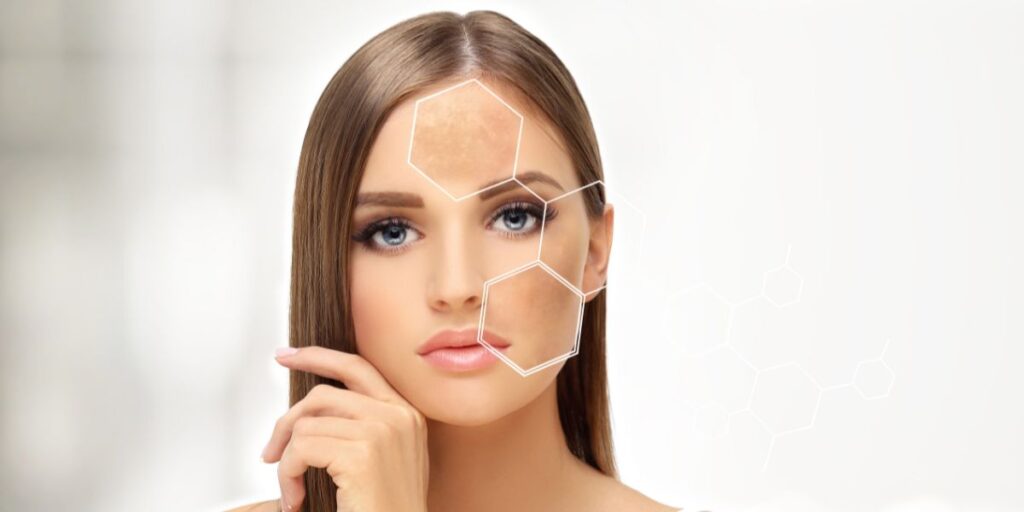
Which Skin Types is AHA Best For
✔ Best for:
- Dry skin – improves hydration and removes flakes
- Normal skin – maintains smooth and even texture
- Dull skin – adds glow and brightness
- Pigmented skin – helps fade dark spots and uneven tone
- Aging skin – reduces fine lines and roughness
⚠ Use with caution:
- Sensitive skin – start with low strength (like lactic or mandelic acid)
- Very irritated or damaged skin – avoid until skin barrier heals

In Beauty Home Salon – Zirakpur
Get clear, glowing skin naturally! 💧
Gentle facials, natural care, and expert tips to keep your skin healthy and radiant. 🌿
📍 Zirakpur | Chandigarh | Panchkula | Mohali
❌ Not best for:
- Very oily or active acne skin (BHA works better here)
Medical Conclusion
AHA is best for skin because it:
- Works on the skin surface
- Improves cell turnover
- Increases hydration
- Reduces pigmentation and signs of aging
That is why dermatologists recommend AHA for dry, dull, pigmented, and aging skin.
How AHA Works on the Skin
Our skin naturally sheds dead cells, but sometimes these dead cells stay on the surface. This can make the skin look dull, rough, and uneven. AHA helps by gently removing dead skin cells. It breaks the bond between old skin cells so they can wash away easily. This process is called chemical exfoliation.
Benefits of AHA for Skin
One of the biggest benefits of AHA is brighter skin. When dead cells are removed, fresh new skin appears. This gives the skin a natural glow.
AHA also helps improve skin texture. Regular use can make the skin feel softer and smoother. Fine lines and rough areas may look less noticeable over time.
Another benefit is that AHA can help reduce dark spots, pigmentation, and acne marks. By speeding up skin renewal, it helps even out skin tone.
Some AHAs, like lactic acid, also help with hydration. They attract moisture to the skin, which makes the skin look plump and healthy.
Common Types of AHA
- Glycolic Acid: Strong and effective. Good for dull skin and dark spots.
- Lactic Acid: Gentler and more moisturizing. Suitable for dry or sensitive skin.
- Mandelic Acid: Very mild. Good for beginners and acne-prone skin.
How to Use AHA (Step-by-Step)
Step 1: Cleanse
Wash your face with a gentle cleanser.
Pat skin dry.
Step 2: Apply AHA
- Take a small amount of AHA (toner or serum).
- Apply a thin layer on dry skin.
- Avoid eyes, lips, and corners of the nose.
Step 3: Wait
Wait 5–10 minutes before the next product.
This allows AHA to work properly.
Step 4: Moisturize
Apply a simple moisturizer to protect the skin barrier.
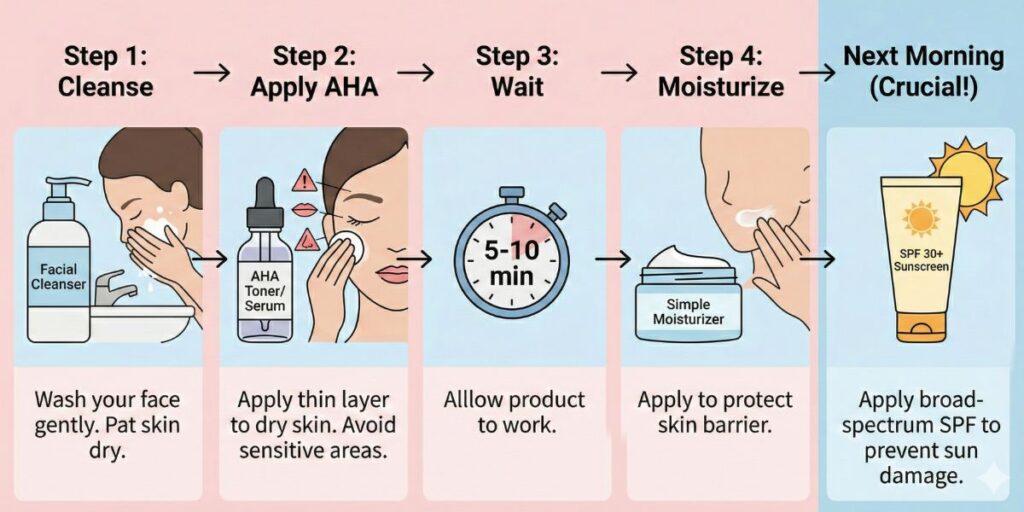
Next Morning (Very Important)
- Apply broad-spectrum sunscreen (SPF 30 or higher).
- Without sunscreen, AHA can cause sun damage and pigmentation.
Important Medical Tips
- Do not use AHA on:
- Broken or irritated skin
- Right after waxing or shaving
- Broken or irritated skin
- Do not mix AHA at the same time with:
- Retinol
- Vitamin C (pure L-ascorbic acid)
- Benzoyl peroxide
- Retinol
Things to Be Careful About
AHA can make your skin more sensitive to sunlight. That is why it is very important to use sunscreen during the day when using AHA products. Without sunscreen, skin damage can happen.
It is also best to start slowly, using AHA once or twice a week. Using too much can cause redness or irritation, especially for sensitive skin.
In Beauty Home Salon – Zirakpur
Get clear, glowing skin naturally! 💧
Gentle facials, natural care, and expert tips to keep your skin healthy and radiant. 🌿
📍 Zirakpur | Chandigarh | Panchkula | Mohali
This information is based on dermatology
It comes from medical studies, dermatologist guidelines, and skincare research.
There is clinically tested data available for ingredients like AHA, which shows how they work, which skin types they are safe for, and what side effects may occur.
Conclusion
AHA is a helpful skincare ingredient that improves skin brightness, smoothness, and overall appearance. When used correctly and with sunscreen, it can make your skin look fresh, clear, and healthy.
1. What is AHA in skincare?
AHA (Alpha Hydroxy Acid) is a natural acid from fruits, milk, or sugar. It helps remove dead skin cells and makes skin smooth and bright.
2. How does AHA work on skin?
AHA gently exfoliates the top layer of skin by breaking the bonds between dead cells. This improves cell turnover, brightens skin, and reduces dark spots.
3. Which skin types can use AHA?
AHA is best for dry, dull, pigmented, and aging skin. Sensitive skin can use mild AHA, like lactic or mandelic acid, slowly.
4. When should I use AHA?
Use AHA at night 1–3 times a week depending on your skin type. Always follow with sunscreen during the day.
5. Can AHA cause side effects?
If used too often or in high strength, AHA can cause redness, irritation, or peeling. Start slow and use moisturizer.